
Your commercial property or farm policy may cover tornado damage - but not every loss or recovery cost. I recommend checking which assets are insured, how claims are valued, and what deductible applies. For example, a 2% wind deductible on a $500,000 insured building would be $10,000, if your policy uses that building’s insured value.
Here’s what I’d review before a storm:
- Covered property: Buildings, detached structures, equipment, inventory, property of others, and livestock.
- Lost income: Whether business income and temporary relocation expenses are covered, plus any waiting periods and limits.
- Your share of the cost: Replacement cost or actual cash value terms, insurance limits, coinsurance, and wind deductibles.
- Coverage gaps: Flood exclusions, debris removal limits, and code-upgrade coverage.
After a tornado, I’d put safety first, report the damage promptly, and save photos, receipts, and income records. Ask for claim deadlines in writing, compare the settlement with your records, and request policy-based explanations for any reductions. Martin Agency can help review your coverage, but your policy and the loss determine payment.
What Property and Business Losses May Be Covered
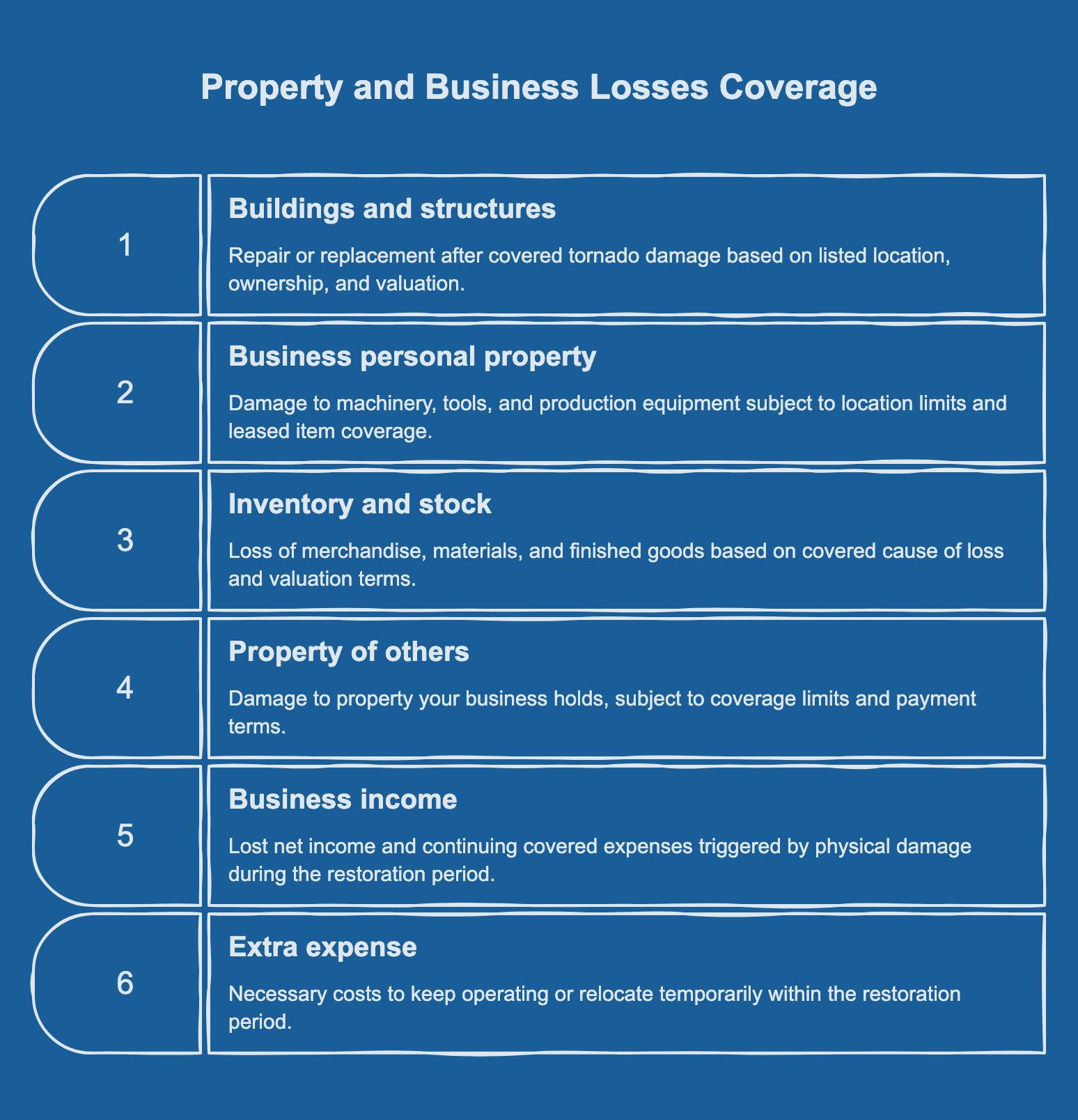
The details below explain where coverage is strongest, where it narrows, and which assets need a separate review.
Buildings, Detached Structures, and Outdoor Property
An insured location doesn’t automatically cover every building. Check each structure separately. Barns, sheds, and other detached structures must be listed or specifically covered. Some outdoor property may also need its own listing on the policy.
If you lease your space, separate the landlord’s building from your tenant improvements and business property. Review equipment, stock, and property of others asset by asset, too.
Equipment, Inventory, and Property of Others
Compare your machinery and tools with your equipment records, including leased items and specialized production equipment. Review your inventory coverage as well, and ask whether property of others needs additional coverage. Coverage can vary by location.
Business Income and Temporary Relocation
Property damage and business income coverage are separate parts of the claim. After covered physical damage, business income coverage may replace lost net income and continuing covered expenses.
Extra expense coverage may pay for temporary relocation or other necessary costs to keep operating. Check that this coverage is included and that expenses fit the restoration period. For business income, review the restoration period, waiting period, and income limit.
sbb-itb-b725090
Coverage Limits, Wind Deductibles, and Exclusions
Knowing which tornado losses your policy may cover is only part of the picture. Next, check how it pays a claim: valuation terms, deductibles, and exclusions.
Tornado coverage limits vary by policy. Review the declarations page for limits, deductibles, and the policy period. Then check each covered item on the property schedule. Valuation terms and endorsements can change the payout. If you work with Martin Agency, ask them to review these documents and valuation terms for each location.
Replacement Cost, Actual Cash Value, and Insurance Limits
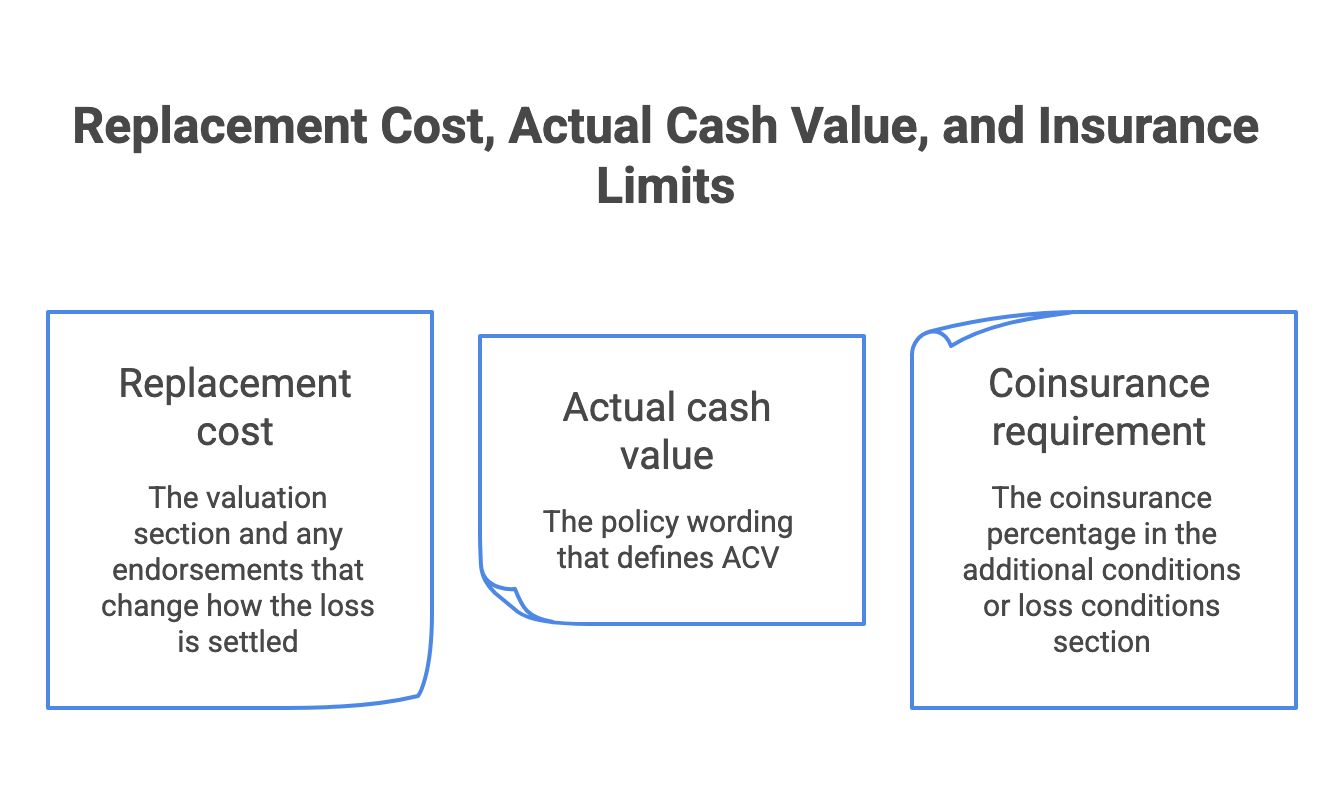
Review each coverage limit, including business income. Make sure detached structures, silos, and mobile machinery are scheduled by location.
Once you’ve checked valuation, look at how much you must pay before coverage applies.
How Wind Deductibles Are Calculated
A wind or hail deductible may be a flat dollar amount or a percentage. It may apply per occurrence, per building, or per location, so check both the calculation and how it applies.
Water Damage and Other Coverage Gaps
Coverage gaps matter just as much as limits. Standard commercial property coverage commonly excludes flood or rising water. Check which exclusions affect water intrusion after a tornado.
Confirm whether business income coverage is included or needs an endorsement. Also check whether the policy is open-peril or named-peril, especially for rural buildings and specialized equipment.
How to Document and File a Tornado Claim
Once you understand your coverage and deductibles, document the loss and file your claim right away.
Report the Damage and Make Temporary Repairs
Put safety before inspection. Follow emergency instructions, then contact your insurer promptly. Martin Agency customers can report damage by phone or email and ask which documents they’ll need.
Ask for every deadline in writing: notice of loss, proof of loss, repair completion, and any deadline for filing a lawsuit. Your policy and state law determine these dates. Don’t assume one deadline covers every requirement.
Record Building, Equipment, and Inventory Damage
Photos and inventories help show what was damaged and what it was worth. When it’s safe, take photos from several angles. List each damaged item, including quantities and identifying details, and separate damaged inventory from undamaged stock.
Keep damaged components when practical, and document anything you discard for safety. Missing receipts? Ask whether supplier records, earlier photos, or accounting reports can help establish ownership and value.
Review the Settlement and Support Lost Income
Compare the adjuster’s estimate line by line with your photos, inventory, and receipts. Look for missing damage or costs left out of the estimate. Keep sales, payroll, and production records, along with relocation receipts, to support your claim, including lost business income. Ask for an itemized explanation of any line-item differences or payment reductions.
If you disagree with the settlement, request a written explanation and the relevant policy provisions, then submit records that support your position. Review your policy’s dispute procedures and the deadlines that apply.
Conclusion: Review Your Property Values and Tornado Coverage
Once you file a claim and review the estimate, payment applies only to covered property and depends on your limits, valuation terms, exclusions, and wind deductible. Check whether your buildings and equipment have replacement cost or actual cash value coverage.
Review property values and insurance records regularly as your business changes. Keep updated inventories and policy copies off-site or in the cloud so you can access them if your premises are damaged.
Before storm season, review a coverage checklist including business income, water exclusions, debris removal limits, and code-upgrade coverage. This policy check can help you avoid coverage surprises later. For a farm or poultry business, also confirm that your structures, specialized equipment, and livestock are specifically covered.
Martin Agency, based in Pocahontas, AR, reviews coverage for rural businesses, farms, and poultry operations across Arkansas and surrounding states. Coverage guidance does not guarantee a claim payment - the policy terms and the loss itself determine the outcome.
FAQs
Am I covered if a tornado knocks out power but spares my building?
Coverage depends on your commercial property policy. Standard property insurance mainly covers physical damage to buildings, equipment, and inventory. Business interruption coverage may help replace lost income if your business stops operating because of a covered event, such as a storm-related power failure.
Review your policy with Martin Agency to check whether it includes utility service interruption or business income protection.
Can I start tornado repairs before the adjuster arrives?
Contact your insurance provider before starting permanent repairs to keep your claim on track. You can take reasonable temporary steps, like boarding up broken windows or covering roof leaks, to protect your inventory and equipment. Before any work begins, take photos to document all damage in detail.
For guidance on your situation and next steps, contact Martin Agency at (870) 892-5222 or rob@martinagencyinc.com to speak with a claims representative.
What if tornado rebuilding costs exceed my coverage?
If rebuilding after a tornado costs more than your policy covers, you’ll pay the difference out of pocket. Your insurer pays only up to the coverage limits in your contract.
Martin Agency recommends regular policy reviews to help prevent coverage gaps. Their team can review your current assets, property risks, and replacement costs, helping you adjust your limits to better protect your business.