How Seasonal Storage Impacts Farm Insurance
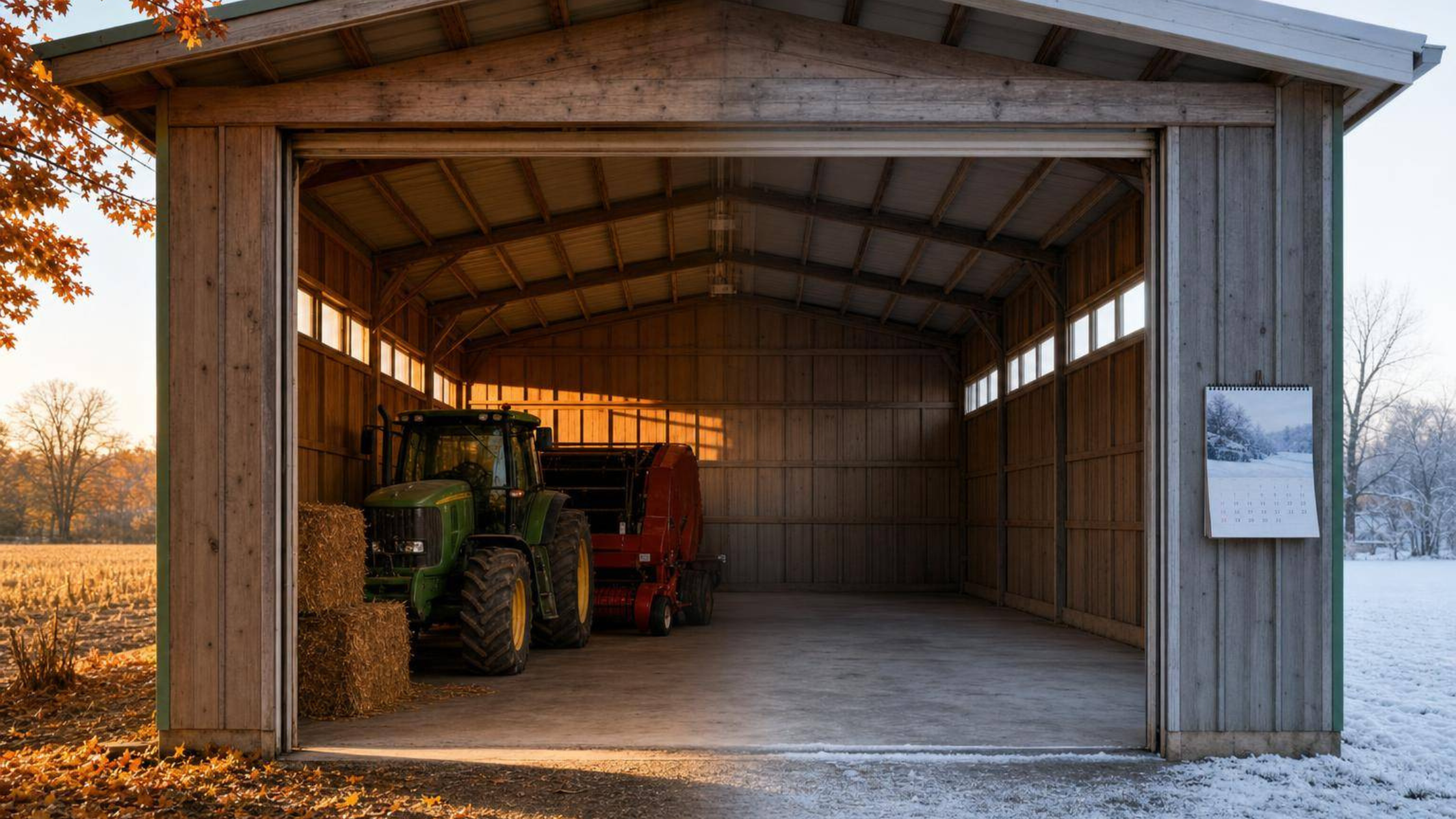
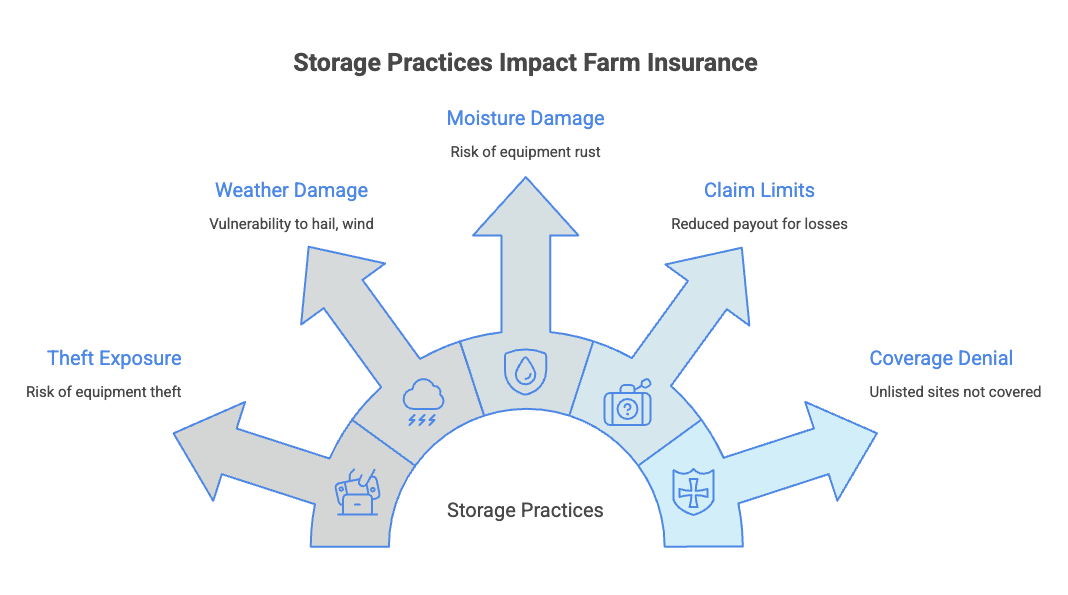
Where I store farm equipment in the off-season can change how an insurance claim gets paid. A machine kept inside, parked in the open, or moved to another property may not be treated the same way. Even a gap of more than 100 feet from an insured building, or a vacant building left unused for 30 to 60 days, can affect coverage.
Here’s the short version:
- Storage location matters: indoor storage usually has fewer claim issues than open storage.
- Policy setup matters: scheduled items have fixed limits, while blanket coverage gives one shared limit.
- Value updates matter: if equipment prices climb and I do not update limits, I may be short by thousands of dollars after a loss.
- Vacancy rules matter: empty barns or sheds can trigger limits on losses like vandalism or water damage.
- Off-site storage matters: if land, leased ground, or storage locations are not listed, coverage may not apply as expected.
A few parts drive most of the risk:
- equipment value
- storage type
- building use
- distance from insured structures
- off-premises storage
- records like photos, serial numbers, and maintenance logs
If I want fewer surprises after a theft, storm, or fire loss, I need my storage plan and policy terms to match before the off-season starts.
Know what your farm policy covers before storage season
Start by checking how your policy classifies the property you want to store. Most farm policies split coverage into farm personal property and farm structures. That split matters more than it may seem at first glance.
Each category is handled its own way, and coverage for a given item depends on how the policy lists it and how the insurer values it. That, in turn, affects your policy limits and what a claim might pay after a loss.
Farm equipment, structures, and supplies are often covered differently
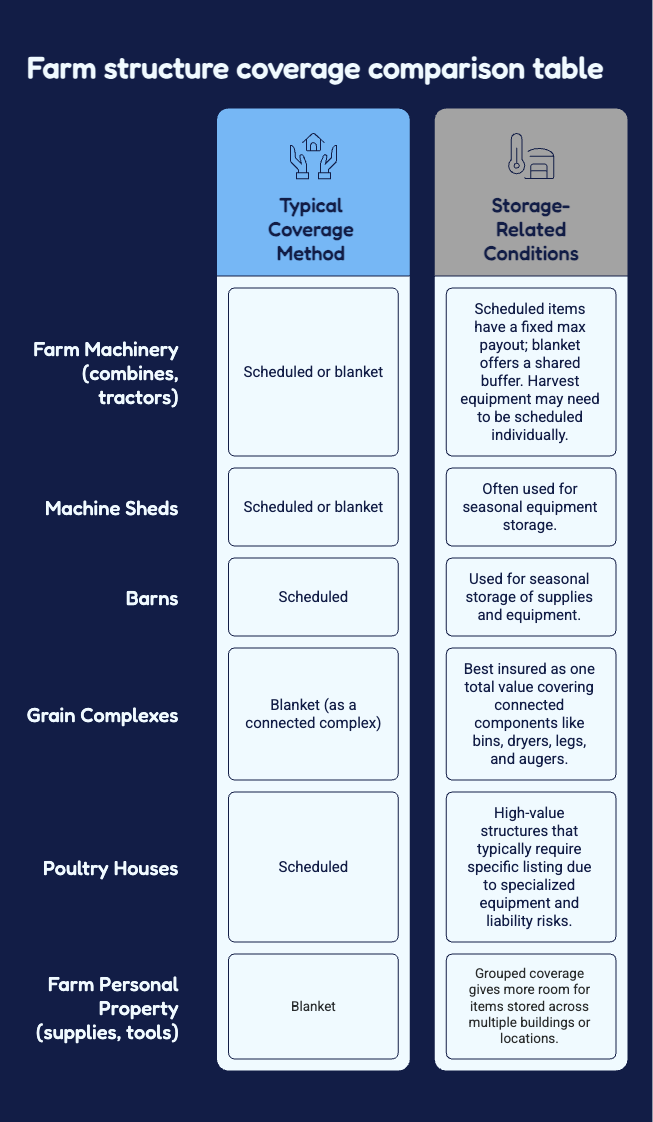
Machinery is often insured at actual cash value, which means depreciation cuts into the claim payment. Farm structures, such as barns and machine sheds, are often scheduled with their own set limits. Supplies and smaller tools usually fall under farm personal property.
Scheduled coverage vs. blanket coverage
How property appears in the policy has a direct effect on what you could collect after a loss. With scheduled coverage, each machine or building has its own fixed dollar limit. If that limit hasn't been updated and prices have gone up, the payout may fall short of the amount needed to replace the item.
With blanket coverage, one shared limit applies across several items. That can give you more room if values shift over time. Some carriers also require high-value harvest equipment, such as combines, to be scheduled on its own.
Farm structure coverage comparison table
Next, storage location can change how those limits respond.
How storage location and building use can change your coverage
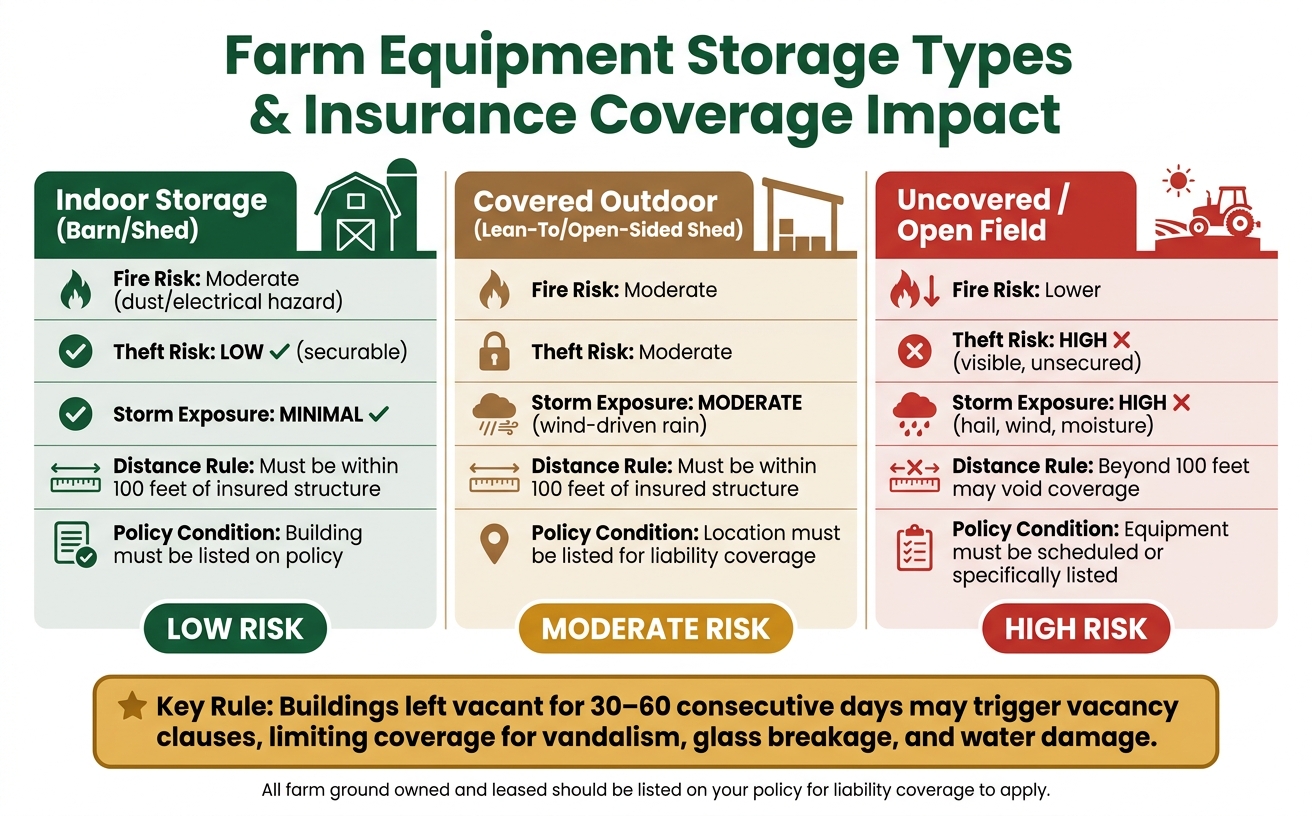
Once your policy type is clear, the next thing to look at is where the equipment is stored. That detail can change how a claim plays out. A tractor kept in a machine shed, under a lean-to, or out in an open field doesn’t face the same level of risk, and insurers may treat each setup a little differently.
Indoor, covered outdoor, and open storage carry different risks
A fully enclosed building gives equipment the most protection. It helps limit exposure to theft, hail, wind, and moisture, which often puts you in the best position during a claim.
Covered outdoor storage, like a lean-to or open-sided shed, offers some protection from storms. But it still leaves equipment exposed to wind-driven rain, and that can shape how an insurer looks at the damage.
Open field storage is the most exposed option. There’s no physical barrier, and the risk of theft or vandalism goes up when equipment is visible and not secured.
Many farm policies cover equipment stored within the required distance from an insured structure, often 100 feet. If the equipment is parked beyond that distance, or at a site that isn’t listed on the policy, coverage may not work the way you expect. So the storage site isn’t just a risk issue. It can also be a coverage issue.
Vacant and unoccupied farm buildings can limit claims
A barn or outbuilding that sits unused can trigger a vacancy clause. Many policies limit or exclude certain types of loss, such as vandalism, glass breakage, or water damage, after a building has been vacant or unoccupied for 30 to 60 consecutive days.
That can catch people off guard. A shop that’s empty during the off-season may still fall under that clause. It’s worth checking the policy wording to see how it defines seasonal use.
Storage practices that protect equipment and support claims
After you choose a storage spot, document the equipment before it goes into the building or yard.
Take time to record each machine’s condition before storage starts. If there’s a loss later, that paperwork can make claim talks much easier. Keep maintenance records, photos, serial numbers, and current values in the same place as your insurance paperwork. And don’t let values sit for years without a check. Your policy should match what the machine is worth now, not what it was worth two or three seasons ago.
Prepare equipment before parking it for the season
These records matter because they back up payout talks after a loss. They can also help show that the equipment was on your property if you ever need to prove a theft or total-loss claim.
Secure buildings and document stored equipment
Lock buildings and add alarms, fire protection, and weather sealing to cut down on loss risk. Then document every major piece of equipment before storage begins.
"The amount you see is the max you would receive if that machine was destroyed. In this equipment market that is a problem, because you're not going to receive the amount of money the machine is worth unless you have updated the amount." - Aaron Bickle, CEO, Bickle Farm Solutions
An updated equipment list can put you in a better spot when you discuss claim valuation after a loss.
Check coverage for off-site storage
Equipment doesn’t always stay on the home farm. If you plan to move machinery off the main property for repair or seasonal storage, call your agent first to make sure coverage still applies. Off-site storage may need separate coverage.
Use that information to update the policy before off-season storage begins.
Adjust your coverage before the off-season starts
Once the equipment is cleaned, secured, and documented, the next step is to update the policy before storage begins.
Update values, schedules, and seasonal-use details
Review your policy before equipment goes into storage. Tractors, combines, and sprayers should each appear on the policy with accurate descriptions and current U.S. dollar values. If you bought a machine during the active season, add it now.
Update equipment, buildings, and any new structures with current values and recent repairs. Scheduled values should match today’s replacement cost. The policy should line up with what is actually being stored this season.
Also check whether any storage building will be treated as vacant during the off-season.
It’s smart to ask about a seasonal-use or storage-only endorsement that keeps fire, theft, and wind coverage in place while equipment is parked. And if anything will sit in a neighbor’s yard, a leased shed, or a temporary storage site, confirm that the policy covers that location too.
Conclusion: Match storage plans with policy terms
When the policy matches the storage plan, claims are easier to handle later. Seasonal storage tends to go much more smoothly when policy limits, storage location, documentation, and endorsements all match the way the farm is operating.
Farmers in Arkansas who need help reviewing seasonal storage coverage can contact Martin Agency in Pocahontas, AR.
FAQs
Does storage beyond 100 feet affect coverage?
Yes. Some policies extend coverage to fixtures and equipment stored within 100 feet of insured buildings.
If you store equipment farther away, that extension may not apply. That can leave a coverage gap. Contact Martin Agency to review your storage layout and make sure your machinery and structures are covered the right way.
Will a vacant barn limit my claim?
Yes. A barn’s occupancy status can affect coverage.
Farm insurance often covers barns for things like fire or storm damage. But the fine print matters. Your policy may include terms, conditions, or exclusions that affect whether a claim gets paid.
If a barn is vacant, there may be rules about how it can be used or what steps you need to take to keep coverage in place. In some cases, those rules can limit a claim or void it altogether.
Because policy language can vary, contact a Martin Agency agent to review your coverage.
Do I need coverage for off-site equipment storage?
Yes. Make sure your policy covers equipment both on and off the farm. Farm equipment insurance can help with property damage and liability claims no matter where the equipment is being used or stored.
If you keep equipment off-site, document the security steps in place, such as locked storage, fencing, and lighting. That can help lower theft risk. Martin Agency offers personalized farm insurance solutions in Arkansas, Missouri, and Tennessee.