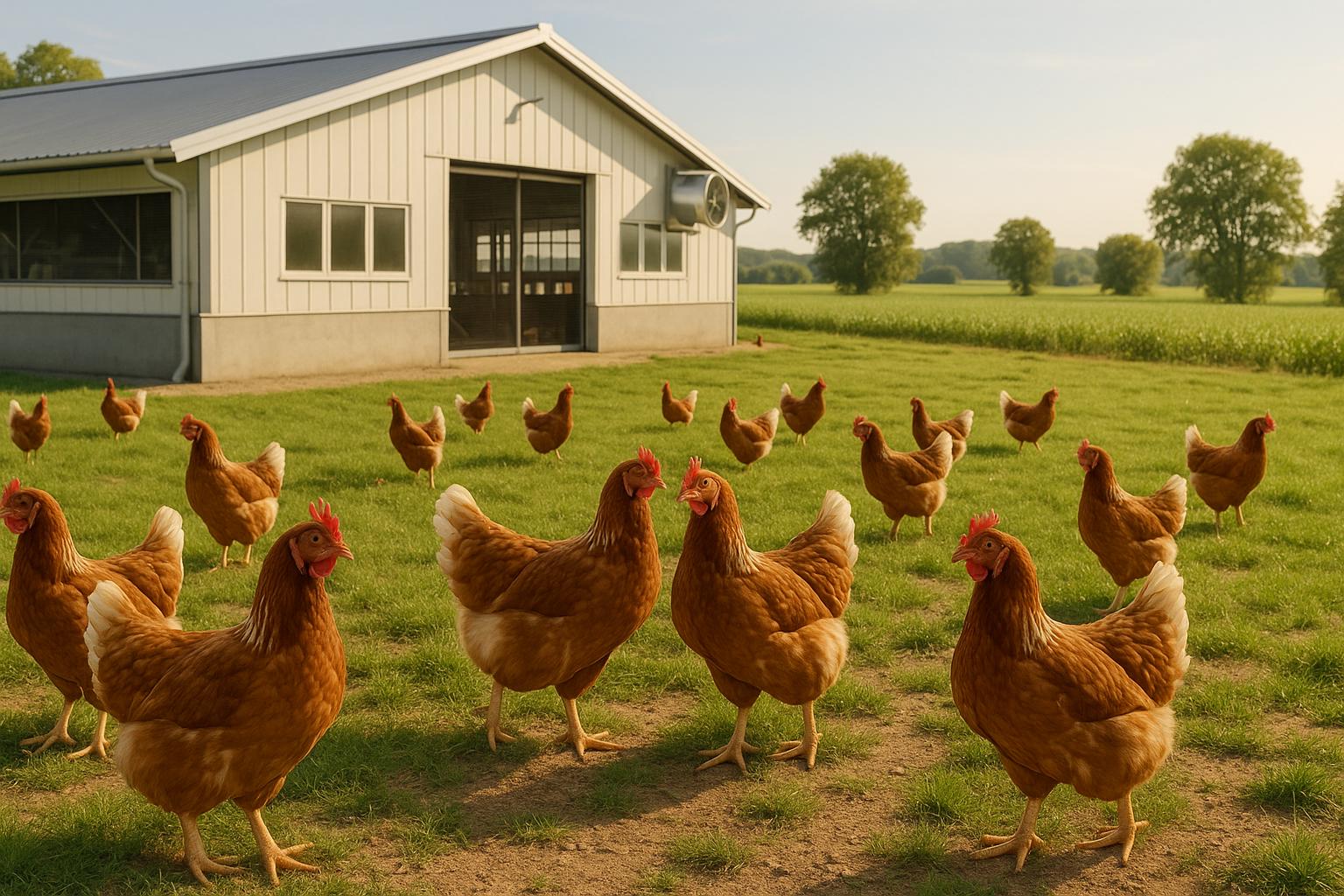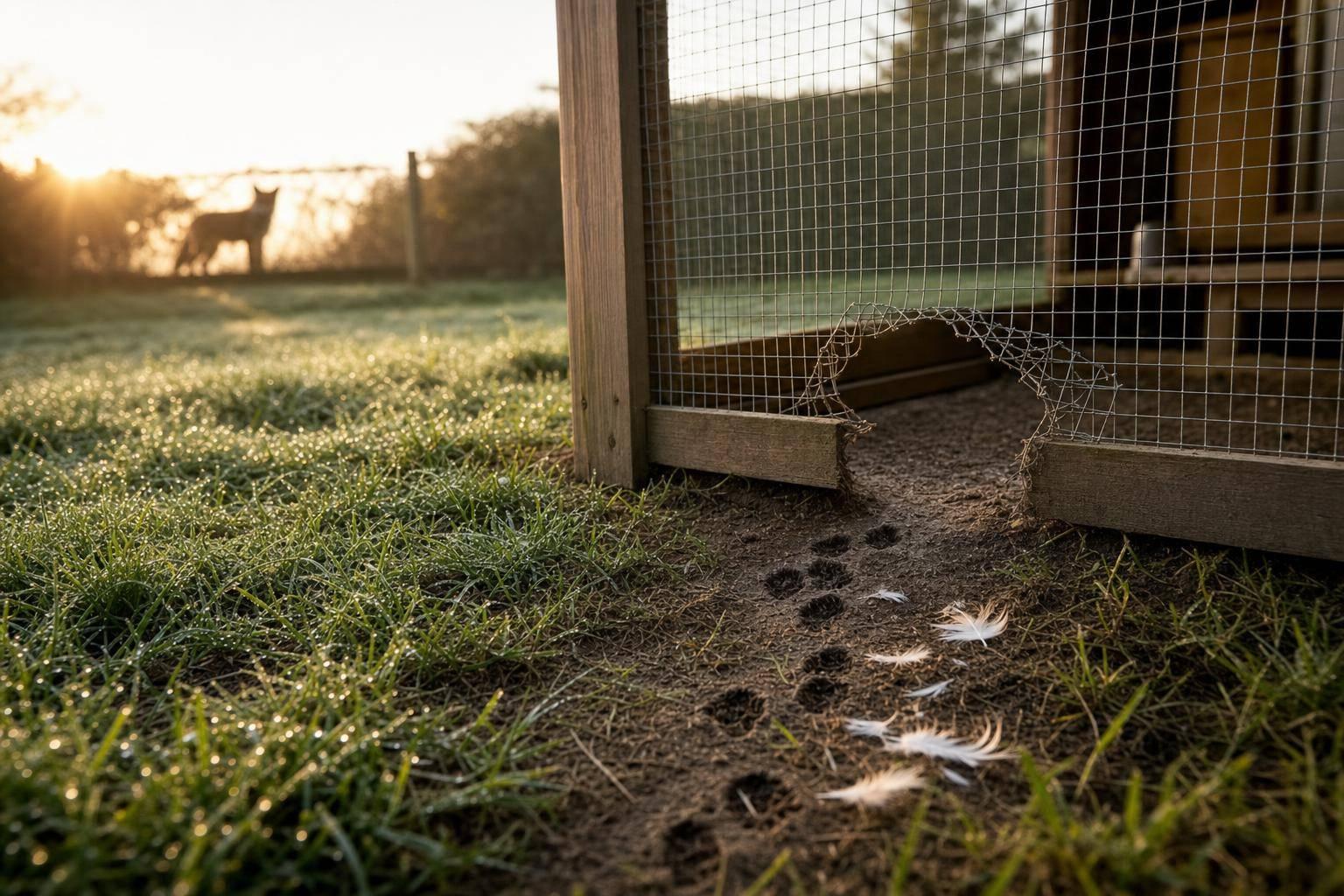
If a chicken is missing, the scene usually tells me what happened. The main clues are damage, entry point, and time of day. In backyard flocks, predators got into enclosures in 62.5% of surveyed flocks, so this is a common problem that often requires farm and poultry insurance to manage the financial impact of losses.
Here’s the short answer:
- One bird missing, few feathers near a fence often points to foxes, coyotes, or bobcats
- Several birds mauled and left behind often points to loose dogs
- Head or neck injuries inside the coop often point to raccoons
- Small puncture wounds and multiple dead birds often point to weasels or mink
- Eggs or chicks missing often point to snakes, skunks, or opossums
- Feather piles in open areas during the day often point to hawks
- Night attacks from above or at roost can point to owls
- Small chicks missing with little mess can point to feral cats
I’d look at three things first:
- What was hurt or taken
- How the predator got in
- When it happened
That matters because the fix changes by predator, and reviewing a poultry farm insurance coverage checklist can help ensure you're protected against these risks. Overhead netting can help with hawks. Tighter wire and better latches can help with raccoons. Buried wire or a skirt 12 to 18 inches out can help with diggers.
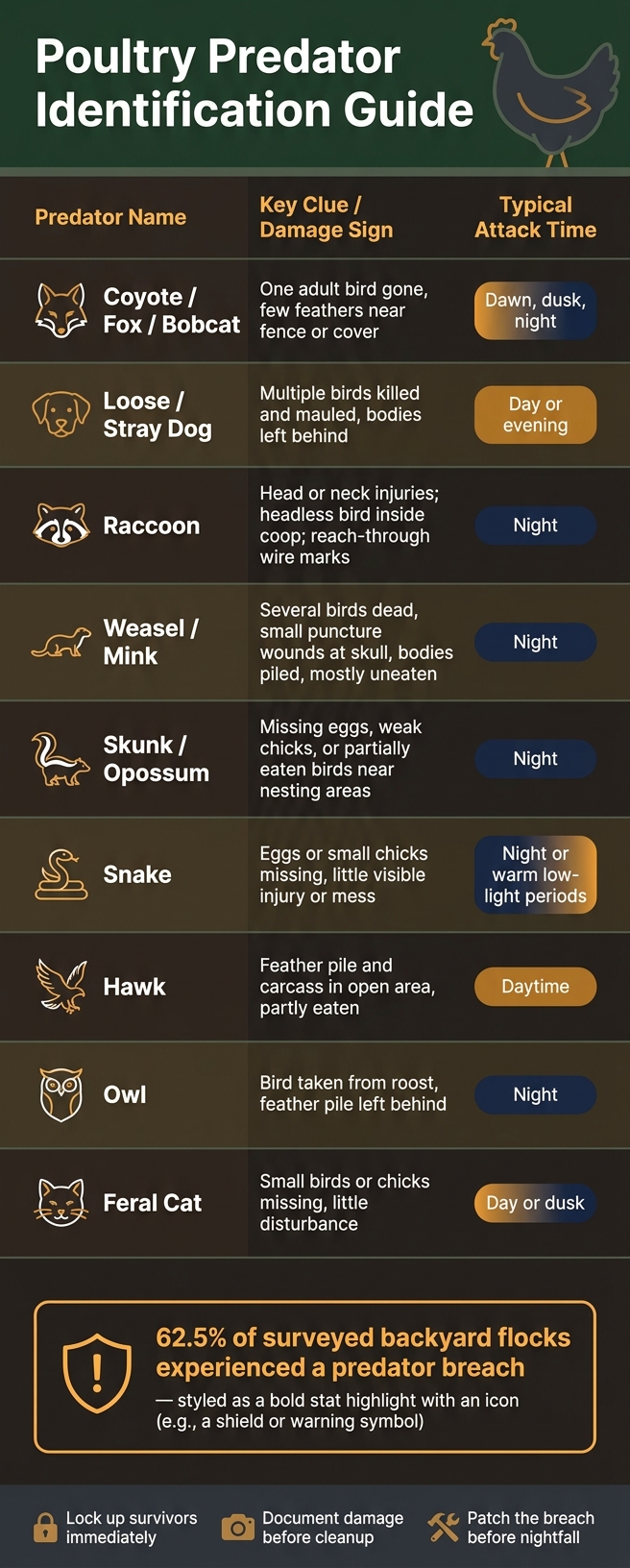
If I were dealing with an attack, I’d lock up surviving birds, treat injuries, and patch the breach before dark. Then I’d take photos and match the clues to the predator.
Common predators around poultry flocks
Poultry predators usually fall into three buckets: larger ground predators, small coop raiders, and birds of prey. Loose dogs fit into the first group.
Coyotes, foxes, bobcats, and stray dogs
Coyotes and foxes often leave a pretty clear pattern: one adult bird is gone, feathers are scattered, or the ground near the fence line looks disturbed. Bobcats can leave much the same scene, especially in wooded rural areas, and there may be very little sign of a fight.
Stray dogs tend to do more damage in a single attack. Instead of taking one bird and leaving, they often kill several and leave the carcasses behind. If you find multiple mauled birds, a dog is a likely cause. If one bird is missing and feathers are left behind, a fox or coyote is more likely.
Raccoons, weasels, skunks, opossums, and snakes
These smaller predators usually go after eggs, chicks, and birds on the roost. They often get in through gaps, weak wire, or flimsy latches. Raccoons are one of the biggest coop threats because they can climb, reach through wire, and work open simple latches or hook-and-eye closures. A raccoon attack often leaves injuries around the head, neck, or breast. In some cases, you may find a decapitated bird with the head pulled through the wire.
Weasels and mink can leave multiple dead birds with small bites at the base of the skull, sometimes in a neat pile. Skunks and opossums are more likely to raid eggs or take weak chicks, while snakes - especially rat snakes - mainly go after eggs and small chicks. That’s the tricky part: a flock can keep losing birds even when the predator is small and the coop still looks untouched.
Hawks, owls, and feral cats
Hawks are the main daytime threat, especially in open runs or free-range setups. Owls create the same risk at night when birds are exposed in weak housing. Feral cats usually target chicks and small birds.
Location and timing can often narrow down the predator before you even look closely at the damage. The clues usually show up in feathers, carcasses, bite marks, and entry points, highlighting the common risks that require proactive management.
sbb-itb-b725090
Signs of each type of predator attack
Before you clean anything up, study the carcass, feathers, and damage. In many cases, that gives you the fastest read on what hit your flock.
Missing birds, feathers, and carcass clues
When adult birds vanish with very little mess, the predator usually grabbed the bird and carried it off. Coyotes, foxes, and bobcats are good at striking fast and hauling prey into cover. Often, they leave behind only a few feathers near the fence line or nearby brush. Hawks and owls tend to leave more behind: a tight pile of feathers and a partly eaten carcass on the ground.
A messy, violent-looking scene tells a different story. If feathers are spread across a big area, several birds are dead, and the carcasses look mauled but hardly eaten, a stray or domestic dog is a strong suspect. You may find broken wings, crushed bodies, and torn skin without any clear feeding pattern.
Head and neck wounds can tell you a lot. A bird found headless inside a locked or secured coop, especially close to the wire, often points to a raccoon reaching through the mesh. Weasels and mink leave another pattern: several birds killed in one visit, small puncture wounds at the head or neck, and carcasses that are mostly untouched. Sometimes the bodies are piled together in one corner.
Here’s a quick guide to the main clues:
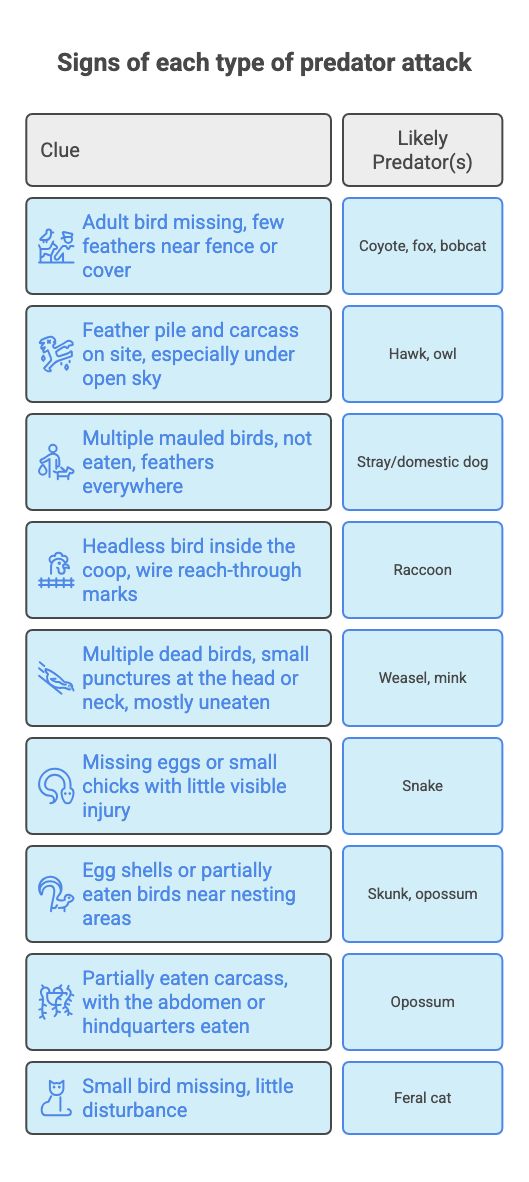
Use these clues along with the time of day and the breach location to narrow it down.
Fence damage, bite marks, and entry points
If the carcass pattern doesn’t give you a clear answer, the breach often does.
Fresh digging under the run or fence line, especially at corners or low spots, is a classic sign of coyotes, foxes, skunks, or opossums tunneling under the edge. If you’ve buried the wire or added a skirt, check for disturbed soil 12 to 18 inches out from the fence base.
Bent wire, torn mesh, pried latches, and busted door frames usually point to raccoons or dogs. Raccoons can work simple hook-and-eye latches and tug at light hardware cloth with their front paws, slowly making gaps bigger. Dogs are rougher. They tend to slam into weak panels or force their way through, leaving bent sections and broken boards behind. Weasels and mink are a different kind of problem. They can slip through tiny gaps around doors, vents, or seams and may leave almost no clear damage.
If you find a headless bird inside a secured coop, inspect the lower wire closely. Look for hair, blood smears, or pulled mesh where a raccoon’s paw may have reached through. Take photos and measurements of the entry point before you fix anything.
When the carcass clues are muddy, the entry point often settles it. Once you know how the predator got in, it becomes much easier to match the damage to the right fix.
When poultry predators attack
If the carcass and entry point still leave doubt, the time of the attack often helps sort it out. Most predators keep fairly steady hunting hours. Put timing together with feathers, bite marks, and entry points, and the pattern usually gets a lot clearer.
Daytime attacks
Losses during the day often point to hawks, loose dogs, or feral cats. Hawks usually hit when chickens are out feeding in the open. In many cases, they leave a pile of feathers and a partly eaten carcass on the ground.
Foxes can hunt in daylight too. If one bird is gone and there are only a few feathers near the fence line, the culprit could be a hawk or a fox. The timing of the loss, plus how much cover is nearby, can help narrow it down.
Night and twilight attacks
Most coop raids happen after dark. Dawn and dusk are the highest-risk windows. If you notice losses during morning chores and the birds were locked up the night before, a mammal that hunts at twilight or at night is the most likely cause.
Once timing starts to point to one predator, act fast to protect the birds you still have. Beyond physical security, consider poultry insurance coverages to mitigate the financial impact of flock losses.
What to do first after a poultry attack
Secure the flock right away. If the predator is still nearby, keep your distance and don't corner it. At that point, stop worrying about ID for a minute and focus on containment.
Move surviving birds and treat urgent injuries
Get every surviving bird into a locked coop or enclosed pen as fast as you can. Keep them confined until repairs are done so the predator doesn't get another shot.
Separate injured birds at once. Chickens will peck at open wounds, and that can make a bad situation worse. Use steady pressure to stop bleeding, flush the wound with sterile saline, and apply plain antibiotic ointment. Avoid products with -caine ingredients. Get veterinary care for deep punctures, exposed bone or organs, broken limbs, heavy blood loss, or shock.
Then check the breach before nightfall.
Check the breach and document the damage
Walk the full perimeter: coop walls, run fencing, doors, latches, and the roof. Look for gaps dug under fencing, bent or chewed wire, pried-open latches, and any opening larger than 1–2 inches. Make fast repairs with hardware cloth and solid temporary barriers. A rough patch is still better than leaving a known opening exposed overnight.
Before you clean up, photograph everything: tracks in the soil, feather piles, droppings, carcass positions, and wire damage. Put a tape measure next to footprints so the scale is clear. Write down the date, the time you found the attack, and the weather. Those details can help confirm which predator was responsible.
Conclusion: Use the clues, timing, and damage pattern
The damage pattern, entry point, and time of attack will usually tell you what did it. Once you've figured that out, the next steps stay the same: secure the survivors, care for the injured, and close the breach before nightfall.
If losses are severe or keep happening, review your poultry farm insurance vs. general farm insurance coverage. The photos, dates, and repair records you gather can help. Use the clues, timing, and damage pattern to move fast and stop a second attack.
FAQs
How can I tell a hawk attack from a fox attack?
The available information doesn’t point to clear signs that separate a hawk attack from a fox attack on poultry.
Martin Agency focuses on risk management and insurance coverage, not wildlife identification. If you need help figuring out what kind of predator was involved, reach out to your local agricultural extension service or a wildlife management professional.
What size gap can let a predator into a coop?
The available information does not say what size gap can let a predator into a poultry coop.
If you want help protecting your buildings, property, and livestock from wildlife risks, contact Martin Agency for farm and poultry insurance options built around your operation.
What should I do right after a chicken attack?
Secure the rest of your flock right away to help prevent more loss. After the area is safe, document the incident with photos and detailed notes about the damage.
Then contact your insurance provider as soon as possible to report the event and check your coverage for predation. Martin Agency can help guide policyholders through the recovery process.