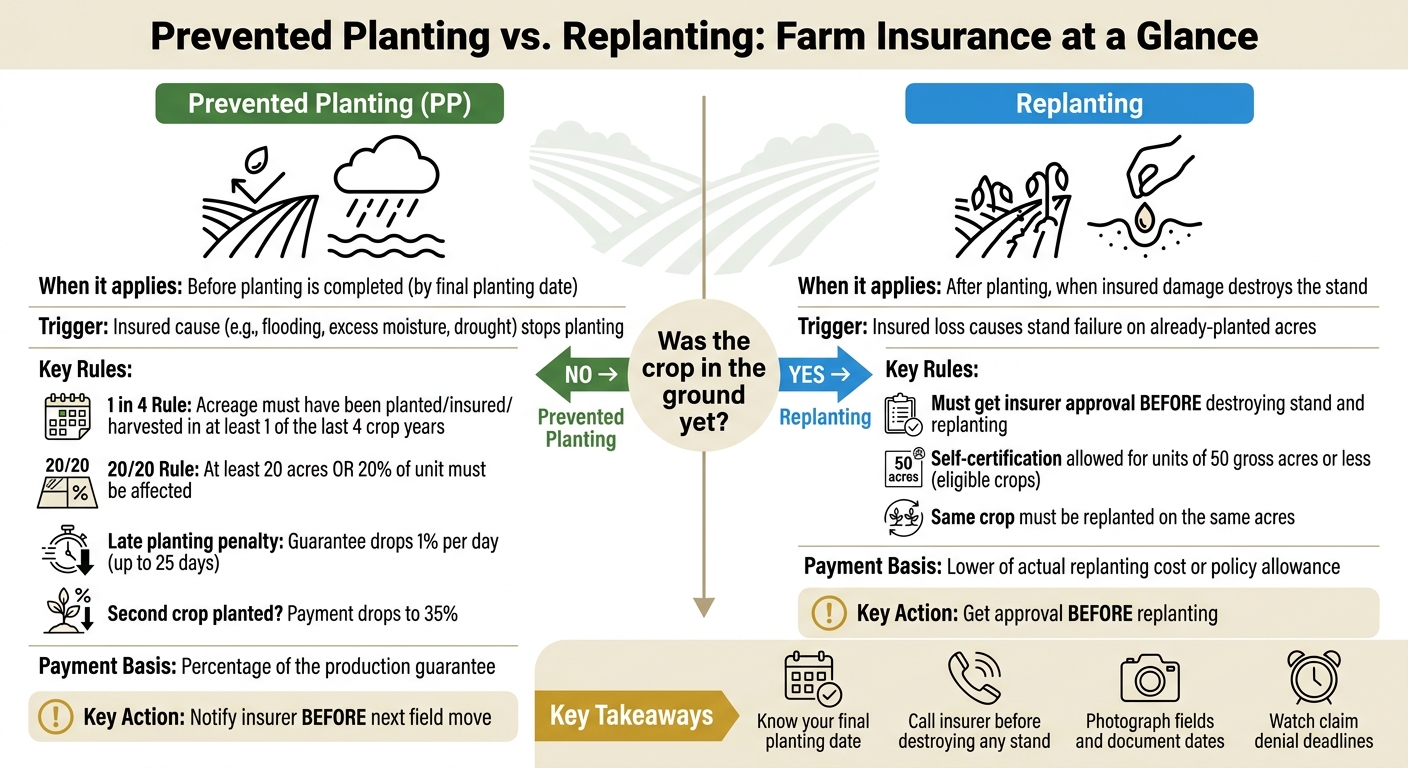
The key difference is simple: if weather or another insured loss stops you before planting, that is prevented planting. If the crop was already planted and then failed, that is replanting.
I’d break it down like this:
- Prevented planting (PP) applies when you cannot plant by the final planting date
- Replanting applies when you already planted, but the stand is too damaged to keep
- PP can be cut to 35% if you later plant a second crop in many cases
- Late planting can trim the guarantee by 1% per day for up to 25 days
- PP often must meet the “1 in 4” rule and the 20 acres or 20% rule
- Replanting usually needs insurer approval first
- Some units at 50 gross acres or less may use self-certification for replanting on eligible crops
If I were making a farm claim decision, I’d start with one question: Was the crop in the ground yet? That one fact shapes the payment, the paperwork, and what I can do next.
Planting vs Replanting Farm Insurance Quick Comparison
In short, this article explains when each coverage starts, what rules control payment, how timing changes the claim, and why records and insurer contact matter right away.
sbb-itb-b725090
Prevented Planting: When an Insured Cause Stops Planting
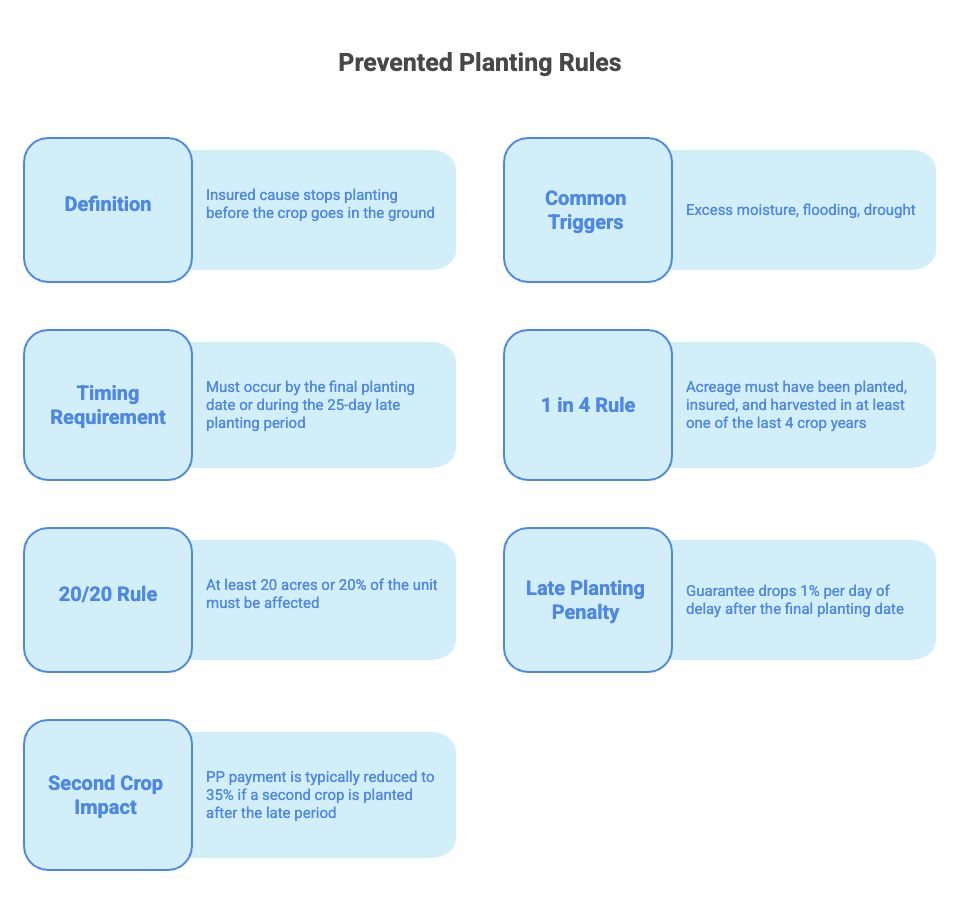
Prevented planting (PP) coverage kicks in when an insured cause of loss - like excess moisture, flooding, or drought - keeps a producer from planting the insured crop by the final planting date.
There’s an important catch here: the cause of loss usually has to be widespread across the local area, not limited to one field. In plain English, PP is not meant for a one-off issue on a single farm, unlike more comprehensive poultry farm insurance vs. general farm insurance policies. The insurer looks at area conditions and losses affecting other producers nearby to decide whether the acres qualify.
Rules, Eligibility, and Payment Structure
To qualify, the acreage must have been planted, insured, and harvested in at least one of the last four crop years. That’s the RMA’s “1 in 4” rule, which was expanded nationwide starting with the 2021 crop year.
The acreage also has to meet the 20/20 rule: at least 20 acres or 20% of the insurable crop acreage in the unit must be affected.
If planting gets pushed back, producers can still use the 25-day late planting period. But there’s a cost. The production guarantee drops by 1% per day after the final planting date.
What if a producer plants a second crop after that late planting period? In most cases, the PP payment drops to 35%. If the acreage is left idle, the full payment stays in place.
PP payments also differ by crop. Corn PP payments are usually higher than soybean payments because the formula reflects corn’s higher input costs. There’s also a cap: a producer can only claim PP for corn up to the highest number of corn acres planted in at least one of the four most recent crop years.
Documentation and Timing Requirements
Once acreage looks like it may qualify, speed matters. Notify the insurer right away, and get written approval before planting another crop, abandoning acreage, or destroying the crop.
Prevented Planting at a Glance: Comparison Table
These rules put PP on a different claim track than replanting.
Replanting: When a Planted Crop Is Damaged and Must Be Seeded Again
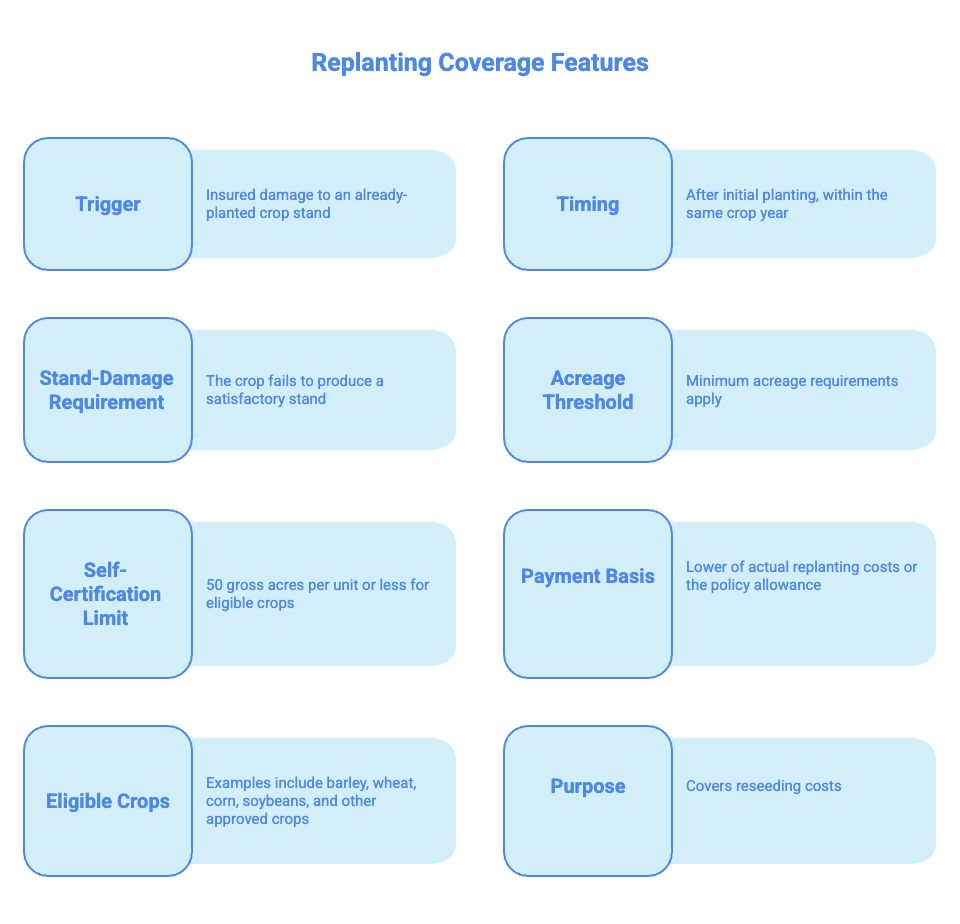
Once a crop is already planted, the issue is no longer missed planting. At that point, the claim moves to stand loss. Replanting coverage helps pay part of the cost to seed the same insured crop again on the same acres after an insurable cause destroys the stand.
That shift matters because the rules change. Before a producer replants, they must get approval from their Approved Insurance Provider (AIP). If they replant without prior consent, the payment can be denied. For eligible crops, AIPs may allow self-certification on units of 50 gross acres or less, which means the replanting claim can be approved without an on-farm inspection.
Payment is capped at the lower of:
- The actual cost to replant
- The amount allowed under the policy as part of your farm and poultry insurance coverage
For some crops, that allowance may be listed as a bushel amount instead of a flat dollar amount.
Replanting Coverage at a Glance: Comparison Table
Prevented Planting vs. Replanting: Direct Differences That Affect Claims
Rule Differences Before and After Planting
When the loss happens changes the claim.
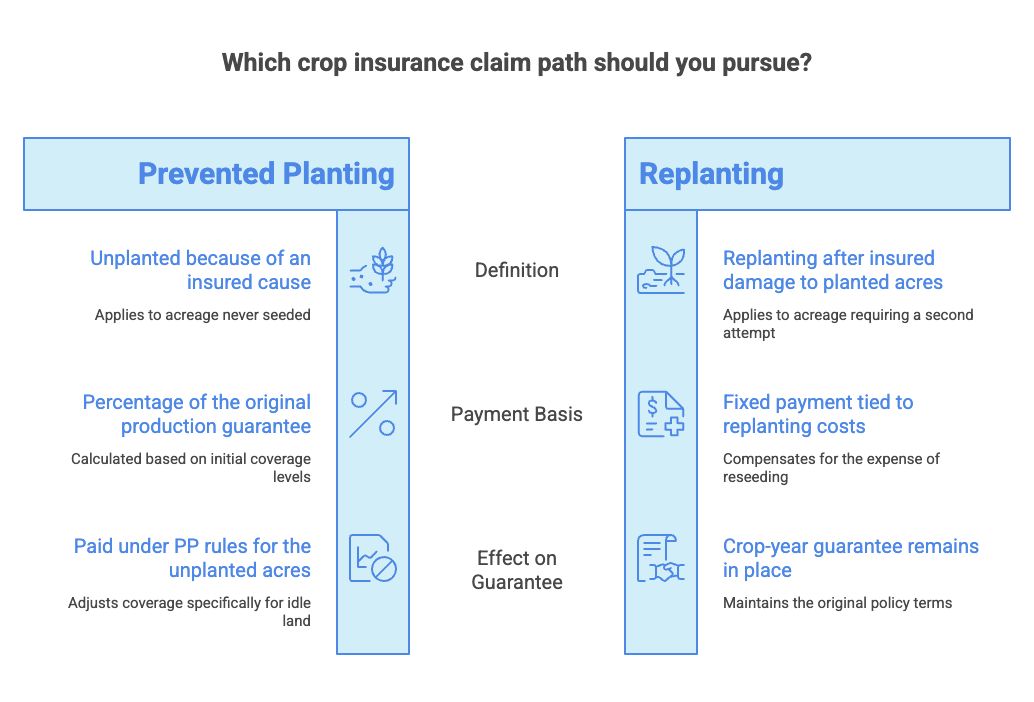
Prevented planting applies when an insured cause keeps a crop from being planted by the final planting date or during the late planting period. Replanting applies after acres were already planted, then suffered insured stand loss that is serious enough to justify planting again, and the insurer approves reseeding.
How Each Option Affects Yield, Revenue, and Next Steps
The payout structure for these insurance services is different too.
PP pays a percentage of the production guarantee. Replanting pays reseed costs and keeps the crop-year guarantee in place. PP can also affect future APH.
Here’s the side-by-side view.
Prevented Planting vs. Replanting: Side-by-Side Table
Conclusion: Recordkeeping, Deadlines, and Local Guidance
The difference comes down to timing and field status: prevented planting applies to acres that could not be planted by the deadline because of an insured cause of loss, while replanting applies to acres that were planted, then suffered heavy stand damage and meet the rules to be seeded again. Once you know which claim type fits, the next job is simple: protect your records and watch every deadline.
There’s also a special rule for crops sold through processor contracts. For processor-contracted crops such as seed corn or sweet corn, eligible prevented-planting acres are capped at the acres listed in the processor contract.
Key Takeaways for Producers
After a loss, four steps matter most:
- Know the final planting date for each crop and county.
- Call your insurer before you destroy a stand, till the field, or plant another crop.
- Photograph the field and note dates, weather, and damage right away.
- Review the deadline for challenging a claim denial.
FAQs
How do I know if my loss is prevented planting or replanting?
Contact your crop insurance agent right away. Don’t change the affected acreage or remove proof of damage until your agent or an adjuster gives you written permission.
Prevented planting means you couldn’t plant because conditions stopped you before the reporting deadline.
Replanting applies when an insured loss damages a crop that was already planted, more than 50% of the stand won’t produce, and it still makes sense to replant.
Report damage in writing as soon as possible, usually within 72 hours.
What records should I keep for a farm insurance claim?
Keep accurate production records for each insurance unit, along with signed copies of every annual acreage report you file with your agent.
If you need to file a damage, prevented planting, or replanting claim, your records need to be detailed. That means tracking planting dates, crop varieties, yields, and production costs. It also helps to keep:
- Photos
- Field assessments
- Rainfall records
- Irrigation schedules
- Related receipts
One more thing: do not alter damaged acreage without written consent from your adjuster.
What happens if I plant a second crop after prevented planting?
Planting a second crop on acreage claimed for prevented planting can affect your payment. That said, recent policy changes now let some acreage planted with an uninsured second crop stay eligible.
Before you use damaged or prevented acreage for anything else, get written approval in advance from your adjuster. It’s also smart to contact Martin Agency first so you don’t put your claim at risk.