My advice: fix leaks and safety hazards promptly, document the damage, and report possible storm losses to your insurer. Waiting can increase repair costs and make it harder to separate new damage from old wear. Records help explain a loss - they don’t guarantee coverage.
Here’s what I recommend:
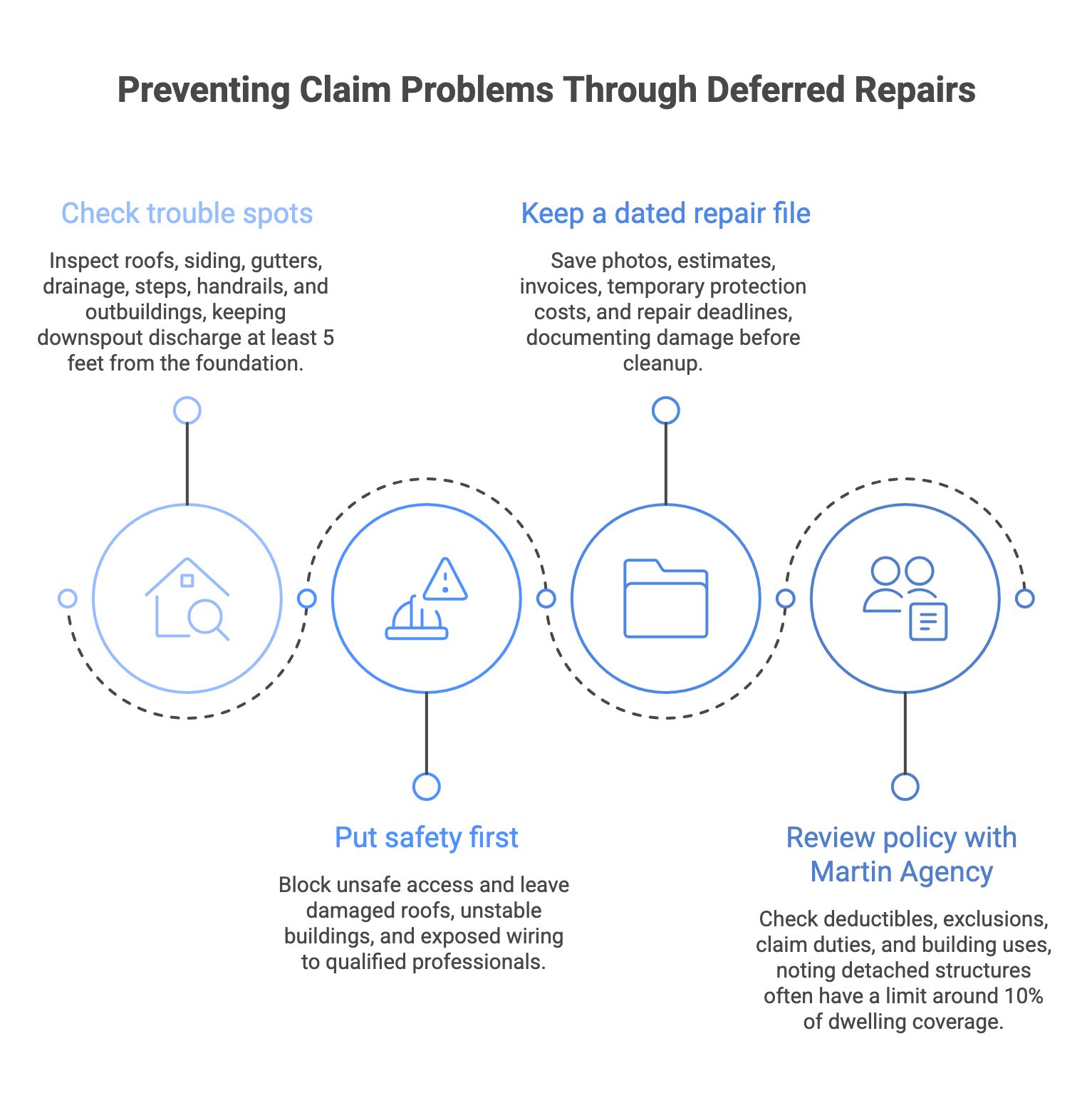
- Check trouble spots: roofs, siding, gutters, drainage, steps, handrails, and outbuildings. Keep downspout discharge at least 5 feet from the foundation, unless local rules require more.
- Put safety first: block unsafe access and leave damaged roofs, unstable buildings, and exposed wiring to qualified professionals.
- Keep a dated repair file: save photos, estimates, invoices, temporary protection costs, and repair deadlines. Document damage before cleanup when it’s safe.
- Review your policy with Martin Agency: check deductibles, exclusions, claim duties, and building uses. Detached structures often have a limit around 10% of dwelling coverage, but your policy may differ.
The goal is simple: limit further damage, keep clear records, and know what your policy covers before the next loss.
Deferred Maintenance Will Cost You Thousands (Fix This Before Winter)
sbb-itb-b725090
Fix Roof, Siding, and Drainage Problems
After documenting the initial damage, inspect the exterior surfaces that may hide its source.
Roof Leaks and Water Damage
Address missing or curling shingles and worn flashing before the next rain. Inside, look for damp attic insulation, peeling paint, and musty odors. A small ceiling stain can hide a much larger wet area: water may travel along framing before it becomes visible. Have a qualified contractor locate the leak rather than just cover the stain.
Storm damage and long-term wear lead to different home and rental insurance claim questions. Ask the contractor to document recent shingle loss, impact marks, deteriorated materials, and signs of repeated seepage.Leave roof access and tarping to a professional. Save contractor photos, inspection notes, and repair invoices in your claim file.Track emergency protection costs separately from roof repairs and interior restoration so each part of the work is easier to evaluate.
If water has reached the attic, check the walls and gutters next.
Siding Rot, Broken Gutters, and Poor Drainage
Wall rot and runoff problems often follow roof leaks, so inspect them together. Rotted siding and failed caulking can allow water into hidden sheathing and framing. Sagging gutters or detached downspouts can send runoff toward foundations and crawl spaces, increasing moisture intrusion.
When rot or repeated seepage appears alongside new storm damage, the claim may involve questions about which damage was already there. Fix the water source, replace damaged materials, and make sure the wall’s drainage system and flashing work properly.
Check these areas each spring and fall and after major storms. Direct downspouts at least 5 feet from the foundation, or follow local rules if they require a longer discharge path.Repair gutters and address drainage problems early. If moisture persists, seek professional advice. Take before-and-after photos from matching angles, then check the repaired drainage path during rain.
Check Steps and Outbuildings for Hazards
Putting off repairs can lead to more than property damage. Unsafe walkways and outbuildings can also lead to injuries, structural losses, and coverage disputes.
Unsafe Steps, Handrails, and Walkways
Inspect exterior steps, porches, decks, ramps, handrails, and walkways at least seasonally and after heavy rain, freezing weather, flooding, or high winds. Check for loose boards, cracked concrete, missing handrails, exposed fasteners, slippery buildup, debris, and poor lighting. These hazards put anyone on the property at risk, especially when rain or ice makes surfaces slick.
Block unsafe access right away. Where possible, provide a safe, well-lit alternate entrance. A warning does not fix the hazard. Arrange repairs with a qualified professional, and record when you found the problem, which barriers you used, and when repairs were completed. A known hazard left unrepaired can matter in an injury claim. Liability coverage depends on the policy, the owner’s legal responsibility, and the facts of the incident.
Detached structures need the same attention.
Barns, Sheds, Workshops, and Poultry Structures
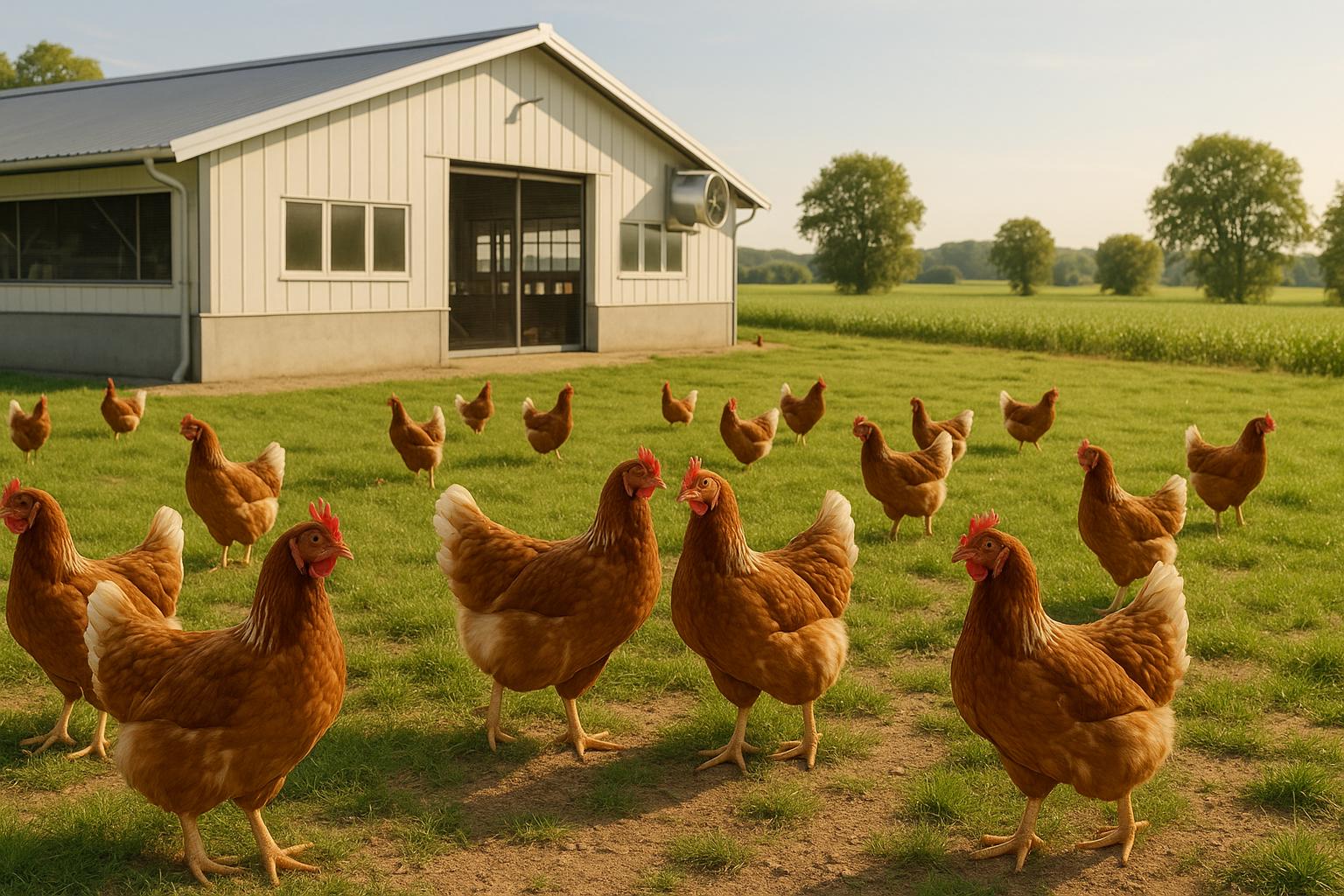
Check poultry farm equipment and structures, including roofs, framing, siding, foundations, and doors, at least annually. Look for leaks, rot, pest damage, sagging, or shifting. In workshops and poultry houses, check electrical components for frayed insulation and frequent breaker trips, and have a licensed electrician inspect them.Delaying repairs can weaken the building, damage stored equipment, and create safety risks and coverage questions.
After severe weather, inspect only from a safe distance. Do not enter a structure that is leaning, flooded, partially collapsed, or has exposed wiring. Keep people and animals away until qualified professionals assess it. Check gates, fences, and access routes, too. Broken latches or washed-out paths can lead visitors toward unsafe areas.
Keep an inventory of each building and major equipment, including size, use, condition, photos, serial numbers, and replacement cost. Update it annually and whenever the use changes. Detached structures commonly have a separate coverage limit - often around 10% of the dwelling limit, though policies vary. Ask Martin Agency to confirm each building’s limit, valuation method, deductible, and covered use. After severe weather, document the structure before repairs so storm damage can be distinguished from pre-existing wear.
Plan Repairs and Keep Records
Turn inspection findings into a dated repair plan, and update it after storms. Start with leaks, structural instability, electrical hazards, and unsafe access. Then address rotted siding, broken gutters, poor drainage, and deteriorating outbuildings. Assign each repair a responsible person and target date, and arrange safe temporary protection. Don’t enter unsafe structures.
Keep records that show what needed fixing and what you did about it.
Document Problems and Finish Repairs
Keep one repair file with the inspection date, location, condition, photos, temporary measures, estimates, invoices, contractor notes, permits, and completion photos. Record start and finish dates, and store copies of original documents in a secure backup. This repair log helps show prompt action and reduce disputes over delays.
Treat an insurer repair notice as a deadline. Check the required work, due date, and proof of completion. Contact your agent if the notice involves a claim or an underwriting requirement. Also reach out if scheduling or permit issues make the deadline unrealistic. Get written confirmation of any extension.
If damage may lead to a claim, preserve evidence of its initial condition before cleanup or replacement.
Report Damage and Preserve Evidence
Notify the insurer promptly after sudden damage - even if you don’t yet know its full extent. Report the date, suspected cause, visible damage, and emergency measures taken. Ask for a claim number and any deadlines that apply.
Photograph damage before cleanup when possible, follow the policy’s reporting and mitigation duties, and discuss major permanent repairs with the insurer before starting.
Keep damaged materials when it’s safe. If health or safety concerns require you to discard something, document what you removed and why, and keep receipts. Records can show prior condition, but they don’t make wear, rot, or deterioration covered.
Use your repair log and photos to support a pre-loss coverage review.
Review Coverage With Martin Agency
Review deductibles, exclusions, loss duties, and detached-structure limits with Martin Agency to help guide repair decisions and prepare for future claims. Disclose rental, business, farm, and poultry use so coverage matches the property.
Ask which endorsements, maintenance duties, or replacement-cost requirements apply. A review clarifies coverage - it doesn’t predict a claim result.
Conclusion: Repair Early and Keep Records
Repair timing and records matter. Delays can worsen damage and make its cause harder to prove. A later storm does not turn preexisting rot or seepage into covered damage.
Check for roof leaks, rotted siding, failing steps, broken gutters, and neglected outbuildings - the problem areas covered above - each season and after severe weather. Fix leaks and safety hazards promptly, keep dated records, and report sudden damage quickly. When it’s safe, take steps to limit further loss.
Make coverage reviews part of your routine, too. An annual review with Martin Agency can confirm that your coverage still fits your home and detached structures.
FAQs
Can my claim cover storm damage alongside old rot?
Coverage depends on your policy. Most homeowners policies cover sudden storm damage, such as wind or hail, but typically exclude rot, wear and tear, or long-term neglect.
If a storm damages a roof that rot has already weakened, your insurer may deny the claim or pay only for the storm-related damage. The payout often accounts for depreciation.
Martin Agency can help you review your policy details.
What if I can’t afford urgent repairs?
If urgent repairs are beyond your budget, address active leaks or structural problems first to help prevent bigger losses that your policy may not cover. Insurers typically cover sudden, accidental damage, but often exclude gradual wear or damage caused by neglected maintenance.
Review your policy with a local Martin Agency agent to understand your deductible options and any gaps in coverage. Keep a dated repair log and receipts to document your property’s maintenance.
Can unfinished repairs affect my policy renewal?
Yes. If underwriting inspections find recurring maintenance problems or neglected property damage, your insurer may choose not to renew your policy. That can leave homeowners needing surplus-lines coverage, which often comes with higher premiums and narrower coverage terms.
To keep your coverage, follow your policy’s safety provisions and property maintenance requirements. If you’re concerned, contact Martin Agency to review your policy and check that your property meets current standards.