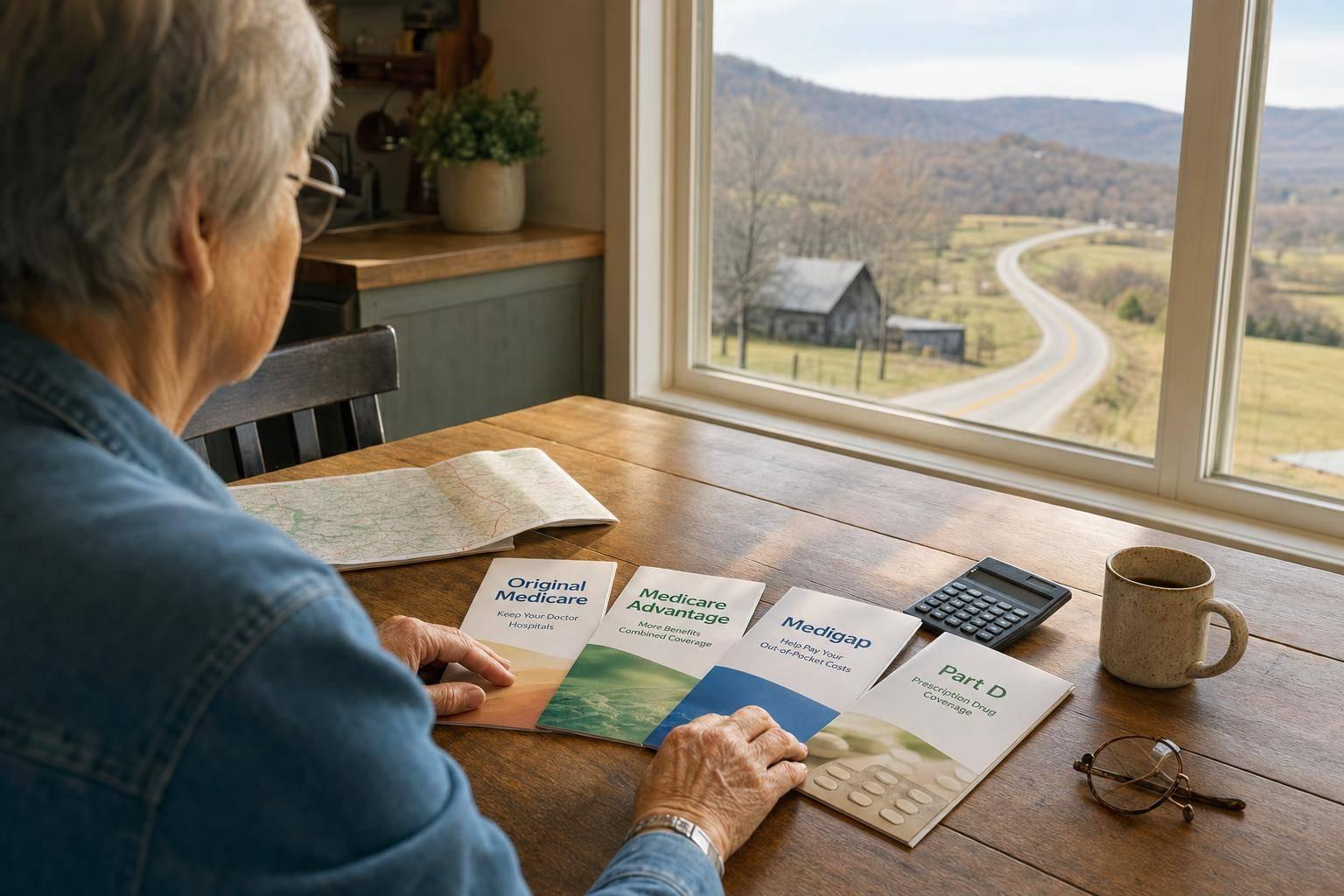
If I live in rural Arkansas, the lowest premium is not always the lowest total cost. The main tradeoff is simple: Original Medicare gives broad doctor access but no yearly medical spending cap, Medicare Advantage may cut monthly plan premiums but uses networks and copays, and Medigap costs more each month but can make medical bills far more predictable.
Here’s the short version I’d want upfront:
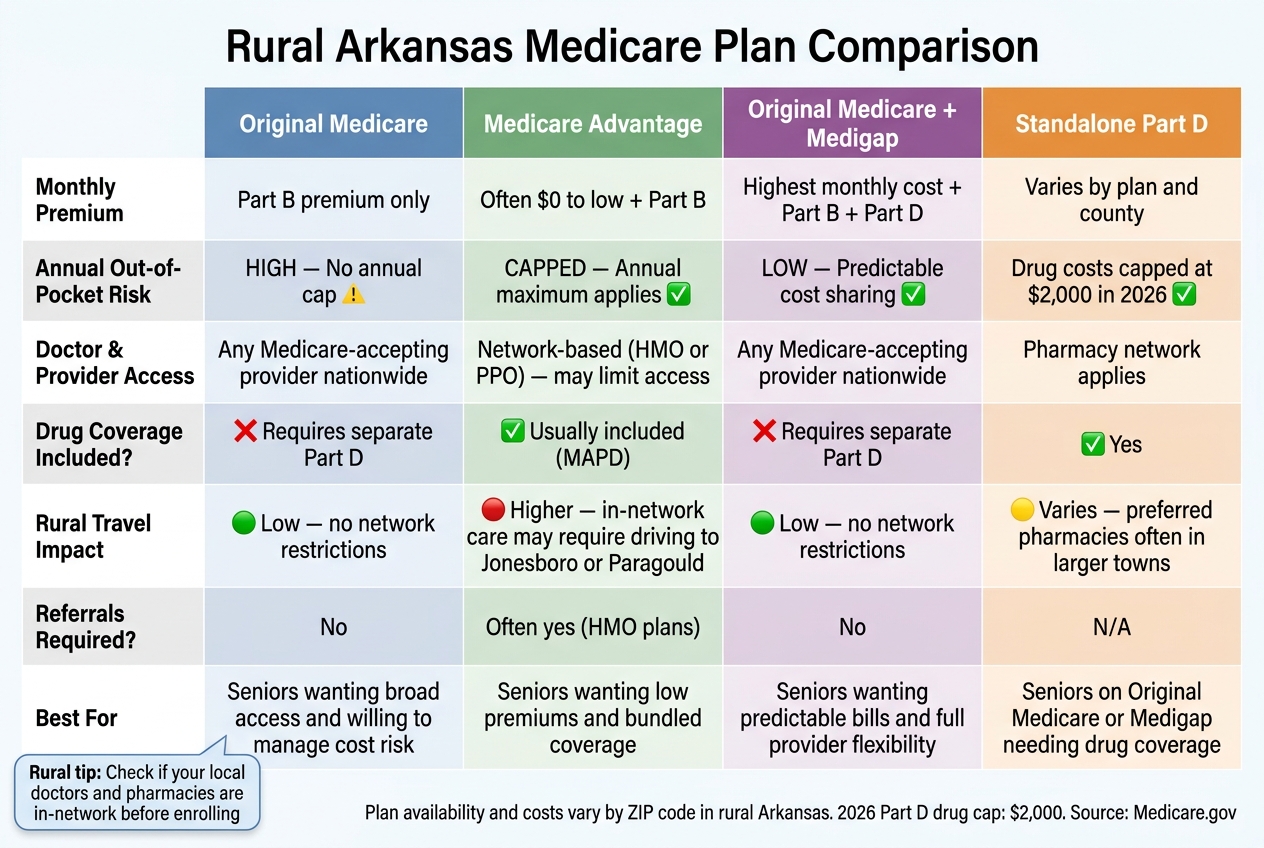
- Original Medicare: broad provider choice, but no annual out-of-pocket limit for medical care
- Medicare Advantage: often $0 premium beyond Part B, but costs can shift to copays, deductibles, and network travel
- Original Medicare + Medigap: higher fixed monthly cost, but lower surprise medical bills
- Standalone Part D: drug costs still vary by plan, even with the $2,000 annual drug cap in 2026
For many people in places like Pocahontas, Corning, or Walnut Ridge, the math is not just about premiums. It can also include:
- specialist copays
- Part D drug costs
- deductible exposure
- extra miles to in-network care
- pharmacy access in larger towns like Jonesboro or Paragould
Medicare in Arkansas - Costs, Plans, and What Makes It Different
sbb-itb-b725090
Bottom line: if I were comparing plans, I’d look at premium, yearly cost risk, doctor access, drug list, and drive time before anything else. That’s the lens this article uses for rural Arkansas.
1. Original Medicare (Part A + Part B)
Original Medicare combines Part A and Part B. For seniors in rural Arkansas, understanding Arkansas Medicare insurance agencies can help clarify why this option offers broad access to care but less protection when medical bills start piling up.
Monthly costs
With Original Medicare, you pay monthly premiums, mostly for Part B. Those premiums stay fixed, but your total yearly spending does not. So even if your premium looks predictable, your total costs can still swing a lot from one year to the next.
Out-of-pocket exposure
Original Medicare does not include an annual out-of-pocket cap. Deductibles and coinsurance can keep stacking up throughout the year. That becomes a bigger issue when someone needs frequent care or sees a lot of specialists.
Network and travel costs
Original Medicare lets you see any doctor or hospital in the U.S. that accepts Medicare. There are no network rules and no referral demands. For rural seniors in Pocahontas or Walnut Ridge, that can make a big difference when specialty care means driving to Jonesboro.
Prescription drug costs
Original Medicare does not cover most prescription drugs, so most seniors need a separate Part D plan.
That tradeoff sets up the next option: Medicare Advantage, which changes how premiums, networks, and drug coverage work.
2. Medicare Advantage (Part C)
Medicare Advantage can lower your fixed monthly premium. But it often shifts more of your costs into copays, deductibles, and provider network rules.
Monthly costs
A lot of Medicare Advantage plans are advertised with a $0 or low premium. Even so, you still have to pay the Medicare Part B premium. Plan availability also changes by county across rural Northeast Arkansas, including Pocahontas, Corning, Piggott, and Walnut Ridge.
Annual out-of-pocket risk
With Medicare Advantage, more of your spending can show up when you actually use care. Copays and deductibles can add up fast if you need doctor visits, tests, or other treatment on a regular basis. That means your yearly costs may climb much faster than the monthly premium first suggests. Speak with our Martin Agency Medicare specialist Michelle Olvey today.
Network and travel costs
Most HMO plans require you to stay in network for care. PPO plans give you more room to go outside the network, but you'll usually pay more when you do. For seniors in rural areas, that can mean extra trips to Jonesboro or Paragould, along with more time on the road and more travel costs.
Prescription drug costs
Many Arkansas Medicare Advantage plans include prescription drug coverage through an MAPD plan. That can remove the need to buy a separate Part D plan and may lower your monthly premium load.
That Medicare Supplement vs. Advantage tradeoff leads into Medigap, which keeps Original Medicare's provider access while changing how costs are shared.
3. Original Medicare + Medigap
If Medicare Advantage keeps premiums lower by putting guardrails around where you can get care, Medigap flips that trade-off. You pay more each month, but when you need care, your share of the bill can drop a lot.
Monthly costs
With this setup, you pay for three separate premiums: the standard Medicare Part B premium, a Medigap policy premium, and a standalone Part D premium for prescription drugs. That usually means higher monthly costs than Medicare Advantage options in Arkansas.
Out-of-pocket exposure
This is where Medigap can change the math. After you meet the Part B deductible, Plan G pays Medicare-approved costs for the rest of the year. That's a big shift from Original Medicare, which leaves you with 20% coinsurance and no out-of-pocket cap.
Network and travel costs
For rural Arkansas seniors, this part often matters most. If care means driving to another town, flexibility can make life a lot easier. You can see any doctor or specialist in the U.S. that accepts Medicare, with no referrals and no network limits. That can matter a lot when specialty care takes you to Jonesboro, Paragould, or Little Rock.
Prescription drug costs
Medigap does not include drug coverage, so you need a standalone Part D plan. Through 2026, standalone Part D plans have a $2,000 annual out-of-pocket cap on covered prescription drugs.
4. Standalone Part D Prescription Drug Plans
Because Medigap doesn't cover prescriptions, Part D is often the main drug-cost choice for rural Arkansas seniors who use Original Medicare or a Medigap policy. And the monthly premium? That's just the first number to look at.
Monthly costs
Premiums change from plan to plan and depend a lot on the medicines you take. If you use few prescriptions, a low-premium plan may look like a good fit. But if you take several brand-name drugs, your costs at the pharmacy can end up much higher than the premium alone would suggest.
Out-of-pocket exposure
The 2026 Part D cap gives people with high drug costs more protection, but that doesn't mean every plan will cost the same overall. Deductibles, copays, and coinsurance still vary enough that total yearly spending can swing quite a bit by plan, based on how fast you hit that cap.
Prescription drug costs
For rural Arkansas seniors, the pharmacy network can make a big difference in what you pay. Copays are often lower at preferred pharmacies, but those locations are often in larger towns like Jonesboro or Paragould. For people living in smaller places like Corning, Piggott, or Hoxie, that can mean extra drive time and added fuel costs.
Mail order can cut down on those trips, especially for people in places like Cherokee Village or Horseshoe Bend and especially for 90-day fills. Formulary tier placement matters too. The same drug can cost a lot more, or less, depending on the plan because your copay is tied directly to the tier where that drug sits.
Before you enroll, compare:
- Pharmacy network costs
- Mail-order pricing
- Formulary tiers
That work can matter a lot, because drug coverage is one of the biggest cost variables alongside premiums and provider access.
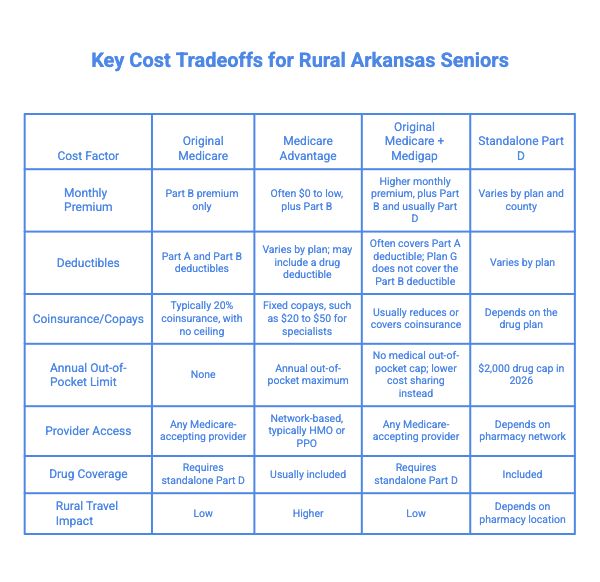
Key Cost Tradeoffs for Rural Arkansas Seniors
No single Medicare option comes out on top for every cost issue. The table below puts the main differences side by side.
Monthly Premiums and Fixed Costs
Part B is part of every path. The main difference is what you pay on top of it.
A low monthly premium can look good at first. But that doesn't always mean lower total costs by December. Copays, drug deductibles, and specialist visit charges can eat up that gap fast. Plan availability and pricing also change by county.
Deductibles, Copays, and Annual Cost Risk
Original Medicare does not have an annual out-of-pocket maximum. That means your costs can keep going up during the year.
Medicare Advantage plans work differently. They put a cap on your yearly spending, and once you hit that annual out-of-pocket maximum, the plan pays 100% of covered services. Medigap helps in another way: it cuts down or wipes out the 20% coinsurance, which can make yearly spending easier to predict, even with a higher monthly premium.
Provider Access, Networks, and Travel Costs
For many rural seniors, travel costs aren't a side issue. They're part of the math. If the nearest specialist is outside your town, network limits can mean longer drives and more money spent getting care.
Original Medicare and Medigap give you access to any Medicare-accepting provider in the U.S., and you don't need referrals. Medicare Advantage plans can be more limited, so it's smart to check whether your local doctors and hospitals are in-network before you enroll.
Drug Formularies, Pharmacy Networks, and the 2026 Part D Cap
Starting in 2026, all Medicare drug coverage will include a $2,000 annual out-of-pocket cap on prescription costs.
That cap helps limit drug spending, but costs can still differ from one plan to another. What you pay before hitting the cap, and how fast you get there, still depends on the plan's formulary and pharmacy network.
These cost gaps shape how seniors compare the tradeoffs across plan types.
Pros and Cons by Plan Type
Here’s the fastest way to compare each plan based on what tends to matter most in rural Arkansas. Start with the tradeoffs that hit your budget and day-to-day life first: monthly premiums, how far you may need to travel, and what you take at the pharmacy.
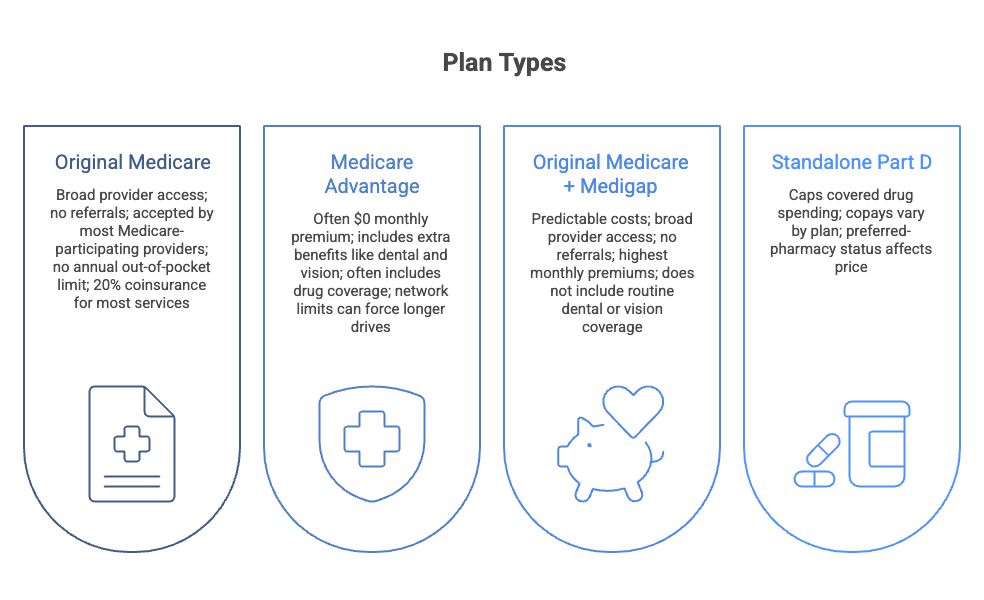
Next, line up these tradeoffs with your doctors, prescriptions, and the routes you normally drive.
Conclusion
There’s no one-size-fits-all Medicare plan for rural Arkansas seniors. The right pick depends on your budget, your doctors, and the prescriptions you take. In plain terms, the choice usually comes down to four things: premium, provider access, drug costs, and travel.
Plan availability can change by ZIP code, so check which 2026 plans are offered where you live before you enroll. It also helps to compare those options against the doctors and pharmacies you actually use, not just the plan details on paper.
If you want free one-on-one help, Arkansas SHIIP can walk you through your options. You can also use Medicare.gov or call 1-800-MEDICARE. For more personal guidance, you can start with Arkansas SHIIP and then review your choices. Martin Agency, based in Pocahontas, AR, also provides Medicare insurance support for Arkansas residents.
FAQs
Which Medicare option usually costs less overall in rural Arkansas?
It comes down to a simple trade-off: lower monthly premiums or lower out-of-pocket costs.
Medicare Advantage plans often have lower premiums. In 2025, they average $7.74 per month. The catch? These plans may come with network limits, and your costs can climb when you need care.
Medigap plans usually cost more each month, at about $65 to $450. But in exchange, you often get broader access to providers and fewer out-of-pocket costs.
How do provider networks affect travel and doctor choices?
Provider networks shape both your access to care and your out-of-pocket costs.
With Medicare Advantage, you’ll usually need to use in-network doctors and facilities to get the lowest costs. These plans may also require referrals or prior authorization, which can add extra steps before you get care. And if you live in a rural area, your choices may be more limited.
With Medigap paired with Original Medicare, you can generally see any doctor or hospital in the U.S. that accepts Medicare. That gives you a lot more room when picking doctors or getting care while traveling.
How should I compare Part D plans if I take regular prescriptions?
Start by making a simple list of your current medications and their dosages. Then review each plan’s formulary to make sure those drugs are covered and to see which cost-sharing tier each one falls into.
Don’t stop at the monthly premium. Compare the full out-of-pocket picture too, including deductibles and copayments. If one of your medications isn’t covered, you may need to look at a different plan or talk with your health care provider about other options.